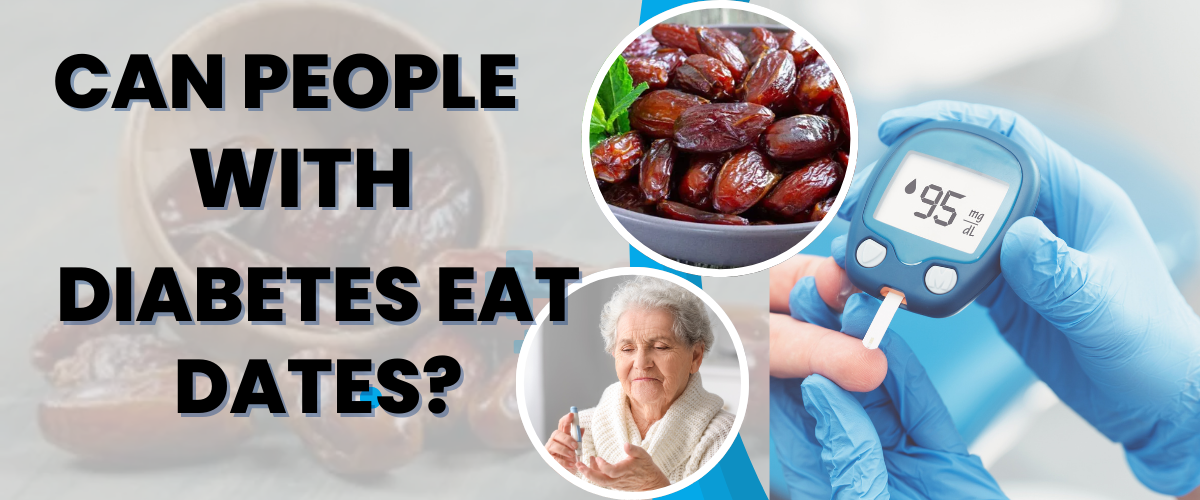
Dates are well-known for being tasty and full of carbs; therefore, individuals with diabetes might ask how they impact blood sugar. With moderation, people having diabetes may eat this nutritious food.
Dates are the juicy and tasty fruit found on a date palm. Both fresh and dried versions of dates are available, and you can eat them on their own or in smoothies, desserts and assorted dishes.
Being sweeter than other fruits, they might cause an issue for people with diabetes.
Let’s explore whether people living with diabetes can safely eat dates.
Why are dates a concern?
- These fruits are very sweet for their size. All types of sugar found in honey are naturally derived from fruit.
- Medjool dates (of about 24 grams) provide 67 calories and around 18 grams of carbohydrates.
- Diabetes often makes it hard for individuals to control their blood sugar. Health experts commonly suggest that patients with the disease pay attention to how many carbs they consume.
- Because they contain a lot of carbs, dates may cause some concern.
- Consuming them in moderate amounts can be a good addition to a healthy diet when you have diabetes.
- Dried dates give you almost 2 grams Trusted Source of fibre or 7% of your daily needs.
It is significant since dietary fibre limits how rapidly your body absorbs carbs, and that is helpful for diabetes. The slower the digestion is for crabs, the less your blood sugar will increase shortly after eating.
How Dates Affect Blood Sugar
GI refers to a method of measuring how carbs affect your blood sugar levels.
- Your blood sugar can rise as high as 100 if you eat something with pure glucose or sugar.
- A low GI carb has a GI between 55 and below, whereas one with a high GI is ranked 70 and above. Medium GI carbs have a GI range of 56 to 69.
- A food with a low GI is less likely to make blood sugar and insulin levels change dramatically.
- Foods with a high GI cause blood sugar to rise very fast. Such a situation can cause blood sugar levels to drop for those who have difficulty keeping their sugar level steady.
- Those with diabetes can include various foods in their diets, though some prefer to choose those with a low GI.
- Even though dates are sweet, their GI is comparably low. When consumed in small amounts, they provide benefits to people who have diabetes.
- The effect of food on blood sugar can also be assessed by checking its glycemic load (GL). GL considers the number of carbs in what you eat and the amount you actually eat.
- First, multiply your carbs by the food’s GI and divide by 100 to find the GL.
- So, I recommend sticking to about 1 ½ dried Medjool dates (equal to 36 gramsTrusted Source), as they would only contain 27 carbs and rank about 37 on the GI. This works out to approximately 15 for GL.
- Low GL foods have a rating between one and ten. A glucose response of 11 to 19 is medium GL, and from 20 and higher is labelled as high GL. Therefore, 2 dates together provide a medium amount of GL.
- By adding a few nuts to a portion of dates, you can help prevent your blood sugar from spiking so high. You should pay attention to your portion size since a medium GL of dates is considered small.
- While more studies are still required, what is known so far indicates dates do not represent a danger to blood sugar management among those with diabetes.
Potential Benefits of Dates
Besides fibre, dates are rich in vitamins and minerals that may keep you healthy. The antioxidants found in dates may help lower the symptoms of inflammation and the impact caused by oxidative stress.
As an example, 4 Medjool dates (about 100 grams) contain the minerals and vitamins below:
- The amount of calcium is 64 mg.
- There is 0.9 mg of iron in this food.
- Potassium is found to the tune of 696 mg.
- You should have 0.4 mg of zinc in your diet each day.
- Magnesium: 130 mg
Since dates include lots of fibre and an array of vitamins and minerals, they might help the digestive tract, the immune system and the heart.
It is also suggested by studies that those with diabetes can add dates to their meals when they include foods like fruits, vegetables and lean proteins.
More controlled studies are required, but in 2020, a trial revealed that HDL levels and total cholesterol levels improved in participants, too.
Bottom Line
Dates have a healthy nutritional value and, because they are naturally sweet, they are delicious.
Because there is fructose in natural honey, it could be a cause of worry for people with diabetes.
Still, since their GI is low and GL is medium, individuals with diabetes can consume these in small amounts.
Additionally, current research suggests blood sugar levels in people with type 2 diabetes are not negatively affected by the dates they eat.
One thought on “Can People with Diabetes Eat Dates?”
Comments are closed.